
Myself: Not Something, Not Nothing
experience without an owner
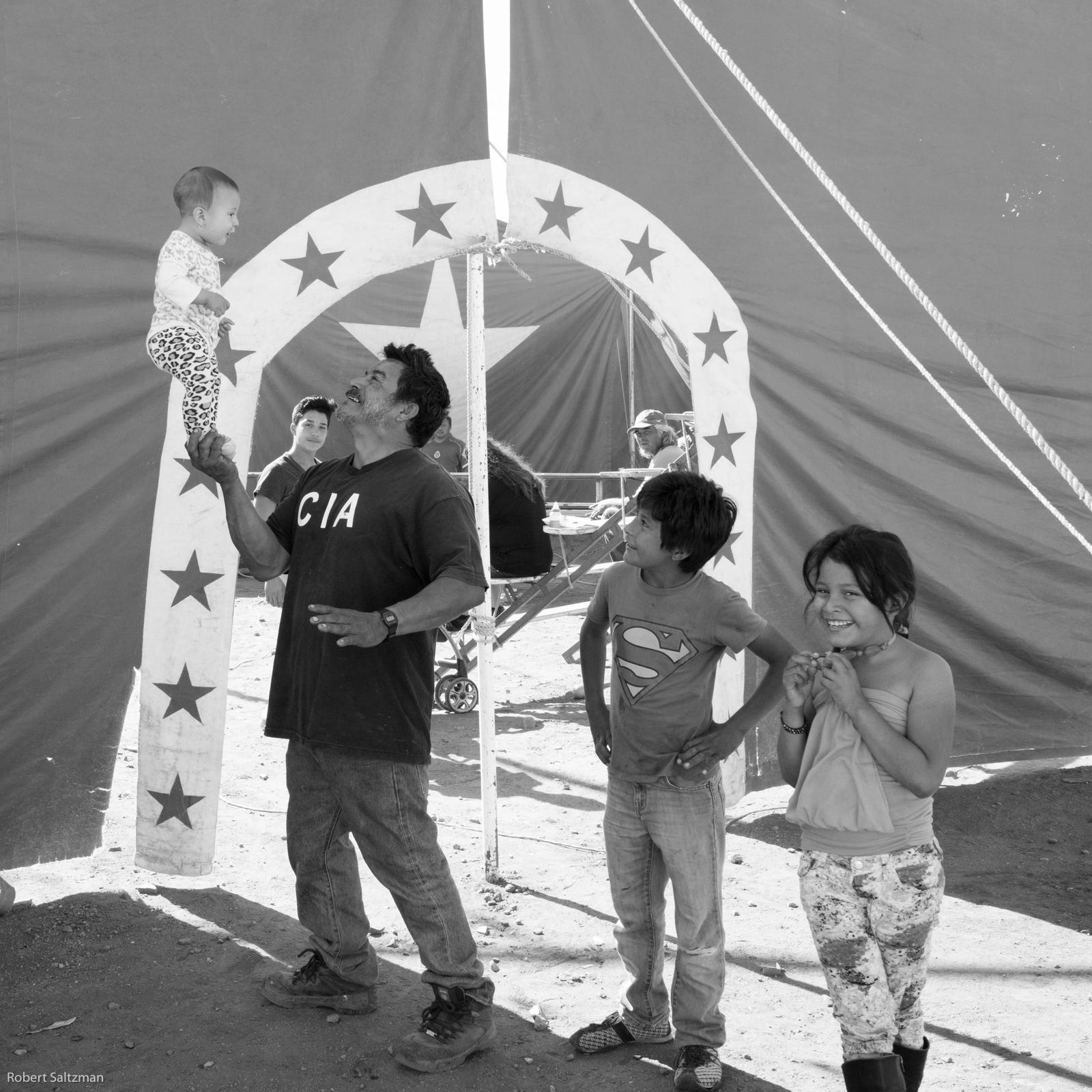
When people begin to question the reality of the self, a simple but stubborn problem appears: if there is no fixed, independent self, then what, if anything, does “myself” refer to from the inside?
From the outside, the answer is straightforward. Social life requires that human beings be treated as discrete units, agents who speak, act, and can be held responsible. Law, morality, and coordination depend on this convention. The idea of a stable self is socially necessary, regardless of whether it corresponds to anything permanent or intrinsic.
From the inside, the picture is different. Experience does not present a central entity directing thoughts and actions, but a flow of sensations, perceptions, emotions, and thoughts that arise and pass. The question then becomes whether this flow itself should be called “myself,” or whether “myself” disappears once the idea of a fixed owner is abandoned.
There is a feeling of being, of existing. It is immediate. In that limited but important sense, “myself” exists as experience. The mistake lies in assuming that this experience points to a separate, enduring thing that has it.
“Myself” names the felt sense of being the apparent center of a world of perceptions and thoughts that differ from those of others. This sense of centrality is real. What is questionable is the further assumption that it refers to a fixed, independent subject underlying experience.
The Buddhist concept of anatta is often rendered as “no-self” or “non-self.” It does not deny experience or existence. It denies that what we call the self has any permanent, freestanding essence. There is experience, but no entity that owns it.
This view rejects two extremes. One is the belief in an unchanging self or soul that persists through time and survives death. The other is the belief that a real self exists but is completely destroyed at death. Both positions assume a reified self, something that can either endure forever or be wiped out entirely.
What exists is a process, a configuration of experience with continuity but no identity. Experience does not belong to a self; the sense of self arises as part of experience.
This perspective parallels David Hume’s bundle theory, according to which what we call an object, or a person, is nothing over and above a collection of properties and relations. Just as a traffic jam is not something in addition to the cars, speeds, distances, and constraints that compose it, a human being is not something in addition to bodily sensations, feelings, perceptions, thoughts, and awareness. There is no further essence tying these together.
In Buddhist psychology, experience is described in terms of five skandhas: material form, feeling, perception, mental activity, and consciousness. None exists independently, and none constitutes a self on its own. A unified sense of “me” arises when these elements co-occur, incrementally, as a functional whole.
This does not mean that the self is unreal. The experience of being a self is real. The illusion is the notion that this experience refers to a fixed thing. The self is not something, and it is not nothing either.
In this view, there is no separate perceiver behind perceptions, no thinker behind thoughts, no feeler behind feelings. Perceiving, thinking, and feeling are not actions issued by a self; they are the coordinated activities from which the sense of self emerges. The “I-thought” is part of this pattern when it appears, not its owner or director.
Nothing is becoming anything in the sense of moving toward a final state. There is no enduring entity progressing through stages toward a conclusion. There is only the ongoing reconfiguration of experience. Each instant gives rise to a slightly different “myself,” ephemeral, contingent, and real precisely because it does not last. Only plastic flowers do not wither and fade.
Ordinary living continues. One still speaks in the first person, makes plans, takes responsibility, and navigates the world. The self is no longer assumed to be an independent object, but understood as a dynamic process inseparable from the conditions that give rise to it.
There is no hidden witness standing apart from this process, no final metaphysical ground waiting to be discovered. There is only what is happening, as it happens. Seeing the absence of a permanent self does not negate experience. It clarifies it.
To say that “myself” is not something and not nothing either is to refuse an unnecessary abstraction. Experience does not require a separate owner. It occurs. Within that occurrence, the sense of being a self arises, changes, and passes, no more mysterious and no more substantial than any other feature of life.
Beautifully said. You see clarity. Right now the word that comes to mind as seen is coordination. Thanks, Robert. And that picture is somehow perfectly right.
My goodness, this was so clear and useful. And as an added comment, as a photographer who spends a lot of time working in graveyards I can attest that even plastic flowers DO wither and fade. 😊